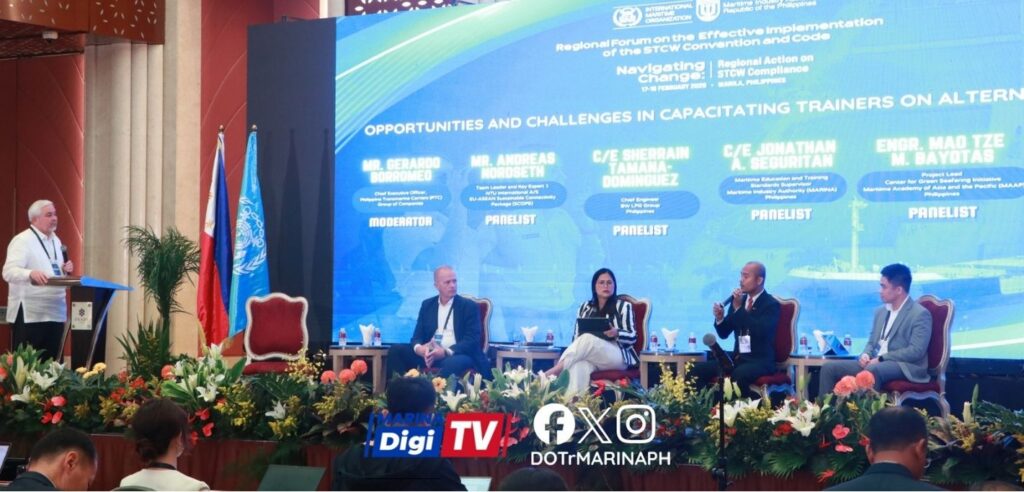
PTC participated in the Regional Forum on the Effective Implementation of the STCW Convention and Code, organized by the International Maritime Organization and the Maritime Industry Authority, held in Manila from 17–19 February 2026.
The event brought together maritime regulators, training institutions, and industry stakeholders from IMO Member States to address the modernization of global seafarer training standards amid decarbonization, digitalization, and accelerating technological change across the shipping sector.
It was graced by senior officials, including IMO Secretary-General Arsenio Dominguez, MARINA Administrator Sonia Malaluan, Ambassador Teodoro Locsin Jr., and Department of Transportation Assistant Secretary Ventura Plan. Deliberations highlighted the forthcoming Phase 2 of the comprehensive review of the STCW Convention and emphasized the shared responsibility of governments and industry to keep international standards current, forward-looking, and responsive to innovation — while ensuring that seafarers remain central to the industry’s transformation.
Mr. Gerardo A. Borromeo, CEO of the PTC Group, moderated the panel on opportunities and challenges in capacitating trainers for alternative fuels. The discussion focused on how maritime education and training frameworks can adapt to emerging fuel technologies and evolving safety requirements. C/E Sherrain Tamana-Dominguez, Chief Engineer, BW LPG Group, Philippines, and Instructor at PHILCAMSAT, joined the same panel and provided insights drawn from both operational experience and training delivery.
Ms. Karen R. Avelino, Senior Vice President for Cruise Operations of PTC and President of PAMTCI, participated as a panelist in the session on competency development related to alternative fuels, underscoring the importance of sustained collaboration between industry and training institutions.
Capt. Pol Winston C. Haboc, Vice President of PHILCAMSAT, also contributed as a panelist in a session on 21st-century and non-technical behavioral skills, highlighting leadership, communication, adaptability, and safety culture as essential complements to technical expertise.
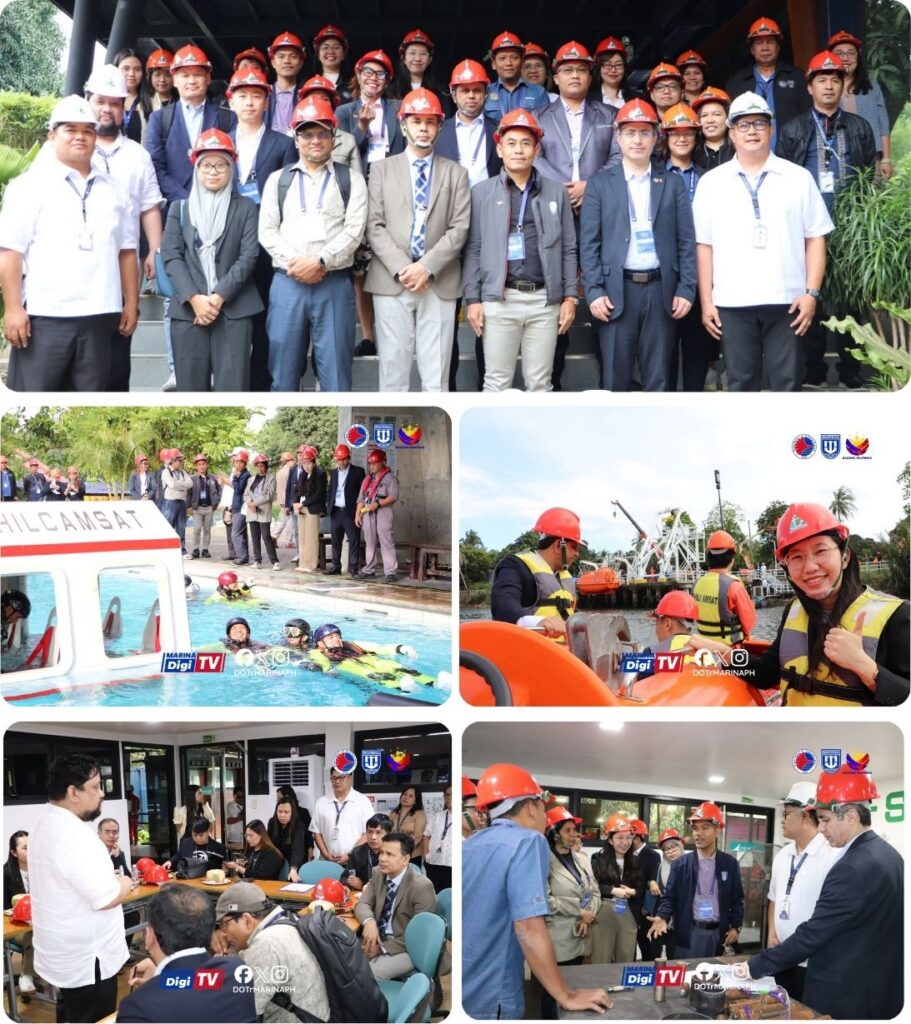
As part of the program, delegates also participated in a technical tour of maritime training institutions, including PHILCAMSAT’s The MAST, where they saw the training facilities and simulation capabilities supporting the development of competent and future-ready seafarers.
*Photos courtesy of the MARINA Facebook Page | https://www.facebook.com/DOTrMARINAPH